Beauty clinics need clear images and analysis data to help clients understand their facial skin characteristics. A professional 3D AI skin analyzer combines image capture, 3D modeling, and AI analysis to help observe pores, wrinkles, pigmentation distribution, and localized surface features. Some devices also include cross-polarized light or UV imaging to provide additional information about skin appearance. Understanding the core functions, practical applications, and limitations of these devices helps clinics select configurations that suit their service needs.
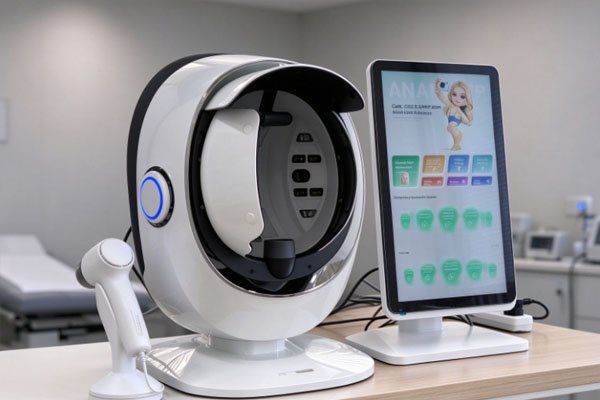
Basic Analysis Functions of a Professional 3D AI Skin Analyzer
Skin analyzers use different imaging modes to present facial features. The available analysis items depend on the device’s optical configuration and software capabilities.
Facial Appearance Analysis
Standard-light images show the overall appearance of the face, while AI analysis helps identify specific areas within the images.
- Pores and Skin Texture: Observe pore distribution, surface roughness, and texture variations.
- Wrinkle Identification: Examine visible fine lines and wrinkles on the forehead, around the eyes, and in other areas.
- Pigmentation and Skin Tone Analysis: Display visible pigmented areas and variations in facial skin tone.
- Redness Observation: Help identify the location and extent of visible red areas on the face.
These functions focus primarily on visible skin characteristics and cannot independently establish a diagnosis of skin disease.
Multi-Mode Optical Imaging
Different optical modes supplement standard-light images and help professionals observe various skin characteristics.
- Standard-Light Imaging: Displays skin tone, pores, fine lines, and surface texture.
- Cross-Polarized Light Imaging: Reduces some surface reflections, helping reveal pigmentation distribution and features associated with redness.
- UV Imaging: Uses ultraviolet light to induce fluorescence in certain substances, helping visualize relevant fluorescent areas and some pigmentation features.
Each imaging mode serves a different purpose. Its actual performance depends on the optical configuration and image-processing capabilities. Images alone cannot confirm an infection or establish a medical diagnosis.
Core Functions of 3D Imaging and AI Analysis
3D imaging presents the surface shape of the face, while AI analysis helps identify and organize image features. Together, they provide complementary information for skin appearance assessment.
3D Modeling and Surface Measurement
When the relevant functions are available, a device can create a 3D facial model and measure localized surface features. These capabilities may include examining acne scars and wrinkles, measuring localized depth, calculating the surface area or depression volume of a specified region, and comparing data captured at different times to observe changes. Results depend on device accuracy, capture conditions, and algorithms. They do not directly indicate skin elasticity or the condition of deeper tissues.
AI Recognition and Report Organization
AI functions help process image information by marking and categorizing features supported by the device.
- Feature Identification: Identify analyzable features such as pores, wrinkles, and pigmented areas.
- Image Integration: Organize and display information captured through different imaging modes.
- Report Generation: Compile image annotations, analysis items, and measurement data into a skin analysis report.
Reports should reflect the functions actually supported by the device. AI results must also be interpreted in the context of image quality and the intended application.
How Can a Professional 3D AI Skin Analyzer Support Beauty Services
These devices can integrate image presentation, surface analysis, and recordkeeping into client consultations, providing reference information for routine skin management.
Supporting Client Communication and Care Planning
Visual images help professionals explain facial features and allow clients to understand areas of interest more clearly.
- Image Presentation: Use standard-light images and other supported imaging results to explain visible skin characteristics.
- Area-Specific Explanations: Use image annotations or 3D measurements to illustrate localized features.
- Skincare Discussions: Discuss daily care options, such as cleansing and moisturizing, based on client needs.
The device provides supplementary observation information. Skincare recommendations should still reflect each client’s circumstances, and analysis results should not be presented as proof of treatment effectiveness.
Recording and Comparing Skin Analysis Data
Devices with data management functions can store client records for future review and comparison.
- Record Storage: Save supported content, including analysis images, 3D models, and reports.
- Historical Comparisons: Compare images and measurement results captured at different times under similar conditions.
- Service Record Continuity: Review previous records to understand clients’ concerns and support follow-up consultations.
Proper recordkeeping helps track visible changes. Access permissions and client privacy must also be managed appropriately.
What Should You Consider When Choosing a Professional 3D AI Skin Analyzer
Device selection should be based on actual analysis needs, hardware configuration, available analysis functions, and software capabilities rather than function names alone.
Verify Imaging Configuration and Measurement Capabilities
Before purchasing, clarify the device configuration. Confirm which imaging modes are available and their intended applications. Check whether the device supports depth, area, or volume measurements and understand the relevant accuracy specifications and operating conditions. Verify whether functions for analyzing pores, wrinkles, pigmentation, and redness are included, and distinguish standard features from optional ones. A clear understanding of the available functions helps prevent misunderstandings and ensures the configuration meets the clinic’s needs.
Evaluate Software and Daily Usability
Software affects the convenience of image capture, report review, and client record management.
- Workflow: Check whether image capture, result review, and report generation are straightforward for staff.
- Data Management: Review available functions for saving client records, retrieving historical results, and exporting data.
- Training and Maintenance: Confirm the availability of operating instructions, maintenance guidance, and technical support to simplify daily use.
Evaluating device performance, software usability, and maintenance requirements together helps clinics make more suitable purchasing decisions.
A professional 3D AI skin analyzer combines multi-mode imaging, 3D surface measurement, and AI image analysis to help beauty clinics observe facial features, compare localized surface structures, and manage skin analysis records. When selecting a device, clinics should verify its actual imaging configuration, measurement capabilities, and software functions while understanding the limitations of the results. Guangzhou Cosnext Technology Co.;Ltd can provide beauty clinics with relevant equipment information and selection support to help them plan configurations that match their business needs.