
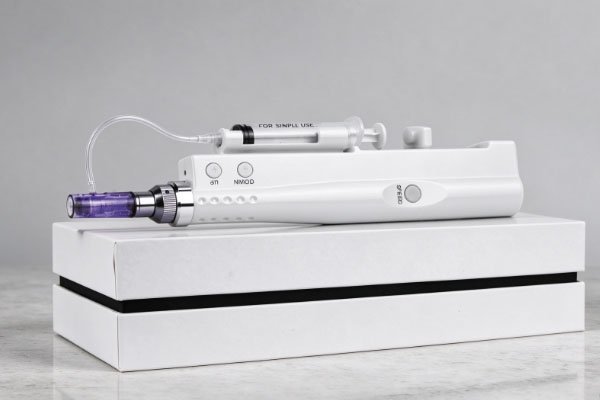
A microneedling pen with a syringe is a type of beauty device that combines a microneedling mechanism with liquid storage or delivery components. The specific design varies depending on the product model and manufacturer. Some products use compatible syringe-type liquid reservoirs to manage skin care solutions, while others use specialized connection structures to combine the needle assembly with a liquid container. For professional skin care applications, it is also necessary to confirm the device’s intended use, applicable treatment areas, and relevant compliance requirements. An ordinary microneedling pen should not automatically be considered an injection medical device. Before purchasing, it is recommended to request product specifications, instructions for use, accessory lists, and quality documentation from the supplier, and to evaluate samples to determine whether the device meets actual usage requirements. Businesses with bulk purchasing, private-label customization, or long-term supply needs can also inquire about OEM/ODM services, customized packaging, and consumable supply capabilities in advance to help reduce subsequent purchasing and maintenance costs.
Confirm the Product Structure and Usage Requirements
Not all microneedling pens with a syringe use the same liquid delivery structure. Before purchasing, understand the specific purpose of the syringe and confirm whether it is used to store skin care solutions, assist with liquid delivery, or serve as another specialized accessory. Only after clarifying the device structure and intended design can you further assess whether the needle, liquid reservoir components, and main unit are compatible with one another.
Check the Connection Between the Syringe and Microneedling Pen
When selecting a product, examine how the syringe-type component is installed, how it is secured, and how it should be removed. An unstable connection may cause liquid leakage, loose accessories, or interruptions during operation. An unsuitable connection structure may also make cleaning and replacement more difficult.
Connection stability: Confirm that the accessory remains securely attached after installation and that the connection is not prone to loosening or leakage.
Liquid capacity: Understand the reservoir capacity, filling method, and liquid compatibility requirements according to the product design and actual usage needs.
Ease of assembly and disassembly: Check whether the syringe-type component can be safely removed according to the instructions and whether specialized tools are required.
Structural compatibility: Confirm that the needle assembly, liquid reservoir component, and main unit belong to compatible models. Avoid arbitrarily mixing accessories from different brands or specifications.
If the supplier cannot clearly explain the purpose of the syringe or provide complete accessory installation instructions, exercise caution before purchasing. Clear product structure documentation helps purchasing personnel understand the device’s operating requirements and facilitates subsequent training and consumable management.
Compare Needle Quality and Operating Performance
The needle assembly is one of the key components to inspect when purchasing a microneedling pen. Needle specifications, materials, manufacturing quality, and replacement methods all affect device performance and usage management. Purchasing decisions should not be based solely on the number of needles. It is also necessary to confirm that the product has clearly identified specifications and that the relevant accessories are suitable for their intended use.
Understand Needle Specifications, Drive Stability, and Operating Controls
Different microneedling pens vary in needle structure and operating methods, so product quality cannot be judged by the number of needles alone. Purchasing personnel should review the technical parameters provided by the manufacturer to confirm whether the device meets the requirements of the planned skin care procedures and understand any relevant operating limitations.
Needle specifications: Check the needle type, specification labels, and intended application range to ensure that consumables are easy to identify and purchase.
Drive stability: Observe whether the device operates smoothly during a compliant product demonstration or sample test, and check for noticeable abnormal vibrations, interruptions, or noise.
Operating controls: Check whether the device provides clearly defined settings, speed adjustments, or other control functions, and confirm that the controls are easy to understand.
Safety design: Check whether the needle can be installed and removed conveniently, whether necessary protective features are provided, and whether the instructions clearly explain relevant risks.
The presence of speed adjustment or needle depth adjustment functions does not mean that every setting is suitable for every user. Specific parameters should be determined according to the manufacturer’s instructions and applicable professional operating standards, rather than being adjusted arbitrarily based on personal trial use.
Verify Hygiene Management, Product Quality, and Supplier Services
Microneedling pens with a syringe involve needles and components that come into contact with liquids. When purchasing, confirm which components are disposable, which are approved for reuse, and what cleaning, disinfection, or sterilization procedures are required for each accessory. Ordinary wiping cannot replace the prescribed disinfection or sterilization process, and disposable accessories should not be reused simply because they appear undamaged.
Check Product Documentation and After-Sales Support
Before placing an official order, verify the product identity, quality documentation, and after-sales service details with the supplier. For devices intended for import, distribution, or professional skin care services, confirm the applicable regulatory requirements based on the sales region and intended use. Do not assume that a product complies with all requirements simply because the supplier advertises certain certifications.
Quality documentation: Request product specifications, instructions for use, intended application range, and relevant quality or compliance documents. Verify that the documentation corresponds to the exact model being purchased.
Consumable supply: Ask about the supply lead times, minimum order quantities, and replacement requirements for needles, syringe-type components, and other accessories.
After-sales service: Understand the warranty coverage, troubleshooting procedures, repair turnaround times, and available technical support.
Customization capabilities: If you plan to develop a brand or purchase in bulk, inquire about OEM/ODM services, exterior design, customized packaging, and instruction manual language services. Confirm the specific minimum order quantities and delivery terms for customized products.
When selecting a supplier, it is not advisable to base purchasing decisions solely on the lowest quotation. Some products have a low initial purchase price, but subsequent operating costs may increase if specialized needles are difficult to obtain, accessories are expensive, or after-sales support is delayed. Comparing equipment prices, consumable costs, maintenance requirements, and supply stability is generally more beneficial for developing a long-term purchasing plan. If you are looking for a supplier of microneedling pens with a syringe, prioritize beauty equipment manufacturers that can provide complete product specifications, accessory lists, sample testing support, and clear after-sales policies. Informing the supplier of your intended use and target market before purchasing can help narrow down the available options and reduce purchasing risks caused by incompatible product structures or insufficient compliance documentation.
Frequently Asked Questions
Q: Can all microneedling pens with a syringe deliver serums?
A: No. Different models may have different structural designs and liquid delivery methods. Some accessories are intended for liquid storage, while others have specialized delivery functions. Before purchasing, review the product instructions to confirm the permitted liquid types, connection methods, and operating limitations. Do not modify the device or add liquids that have not been approved for use.
Q: Should needle quantity or device quality be the priority when purchasing?
A: Priority should be given to verifying needle specifications, manufacturing quality, operating stability, and consumable management requirements. Needle quantity is only one product parameter and does not directly demonstrate device quality. For components that come into contact with the skin, also confirm their intended application, packaging condition, and single-use requirements.
Q: Can a microneedling pen with a syringe be reused?
A: The main unit and accessories must be considered separately. Whether the main unit can be reused depends on the manufacturer’s instructions. Disposable needles and syringe-type accessories should be handled according to the product labeling and usage requirements. Only components explicitly approved for reuse may be cleaned and processed according to the prescribed procedures. A clean appearance alone is not sufficient grounds for reuse.
When selecting a microneedling pen with a syringe, focus on the product structure, the purpose of the syringe-type accessories, needle specifications, operating stability, and hygiene management requirements. Clear product instructions, reliable consumable supplies, and comprehensive after-sales service are equally important criteria when determining whether a supplier is suitable for long-term cooperation. Beauty clinics are advised to prioritize products with clear operating instructions, convenient accessory replacement, and well-defined maintenance procedures, and to evaluate samples before purchasing. Beauty equipment distributors and brand purchasers should also verify bulk pricing, supply lead times, quality documentation, and OEM/ODM customization terms rather than focusing only on the device’s appearance or initial quotation. If you need to purchase a microneedling pen with a syringe for a specific skin care procedure, inform the supplier of the intended use, target market, purchase quantity, and accessory requirements, then verify the product specifications and applicable requirements individually. A standardized selection process helps determine more accurately whether the product meets purchasing requirements and establishes clear standards for subsequent consumable management, equipment maintenance, and after-sales service.





