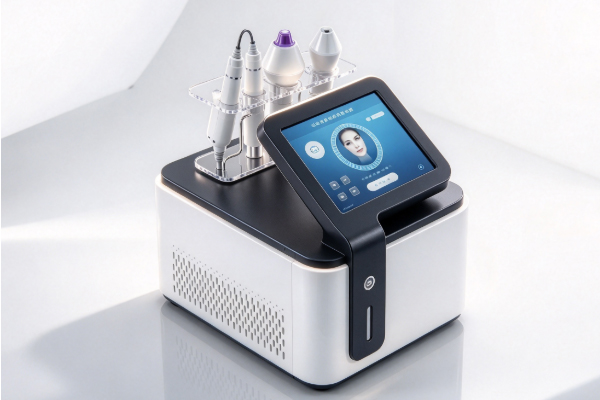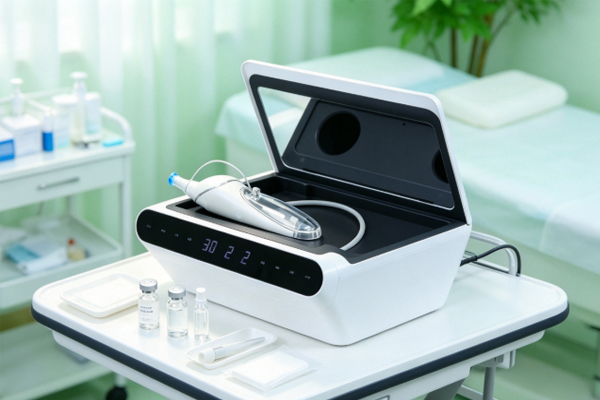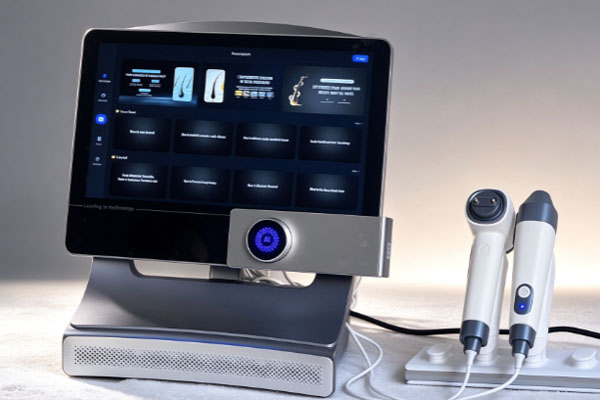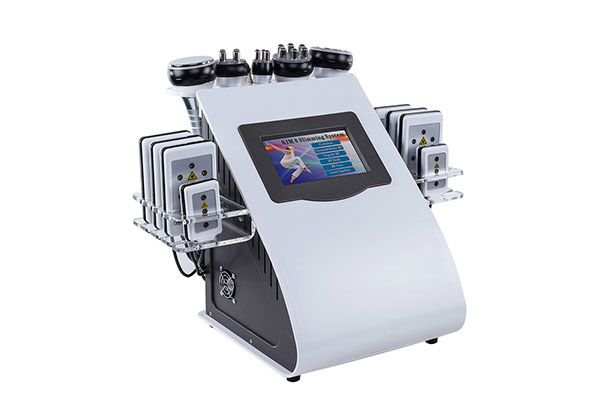
A microneedling pen equipped with a syringe generally refers to a microneedling beauty device that includes a syringe-style liquid storage or delivery component. Depending on the device’s structural design, this accessory may be used to hold skincare liquids, assist with liquid extraction, monitor the remaining liquid volume, or support liquid delivery when the device is specifically designed for this function. The microneedling pen is primarily responsible for needle movement and operation on the skin surface. When the two components are designed to work together, they can simplify certain care procedures and make liquid management more convenient. Traditional microneedling pens generally require compatible skincare products to complete the procedure. Depending on the instructions, these products may be applied to the skin surface or used with a specially designed liquid delivery structure.
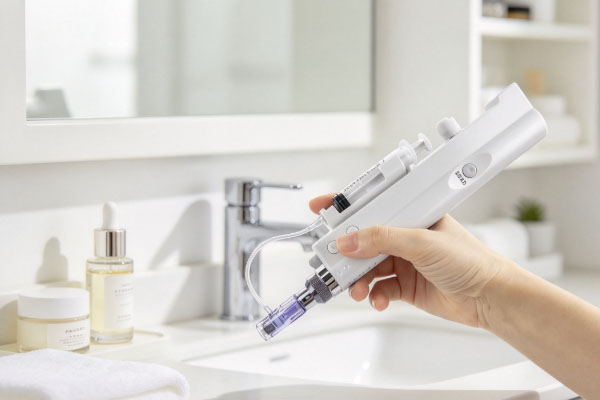
Adding a syringe-style component may provide a more convenient way to store and draw liquids, reducing the need for repeated handling. However, product designs vary considerably. Some syringes serve only as independent liquid extraction tools, while others are dedicated liquid storage components designed for specific devices. Therefore, not all microneedling pens equipped with syringes should be assumed to have the same functions. The primary purpose of a syringe-equipped microneedling pen is to assist with skincare liquid management, not to automatically give the device an injection function. Ordinary skincare serums are not necessarily suitable for microneedling procedures, and the presence of a syringe does not mean that the product can be used for intradermal injection. Before use, carefully read the product instructions and confirm the device’s intended purpose, permitted liquid types, accessory specifications, and operating limitations.
Basic Functional Differences Between a Microneedling Pen and a Syringe
A microneedling pen and a syringe do not perform exactly the same tasks. The main components of a microneedling pen typically include a handpiece, drive mechanism, needle assembly, and control components. Some models also feature needle length adjustment, operating speed adjustment, or a dedicated liquid storage structure. A syringe is primarily used to contain and transfer liquids, and its capacity, connector, and sealing structure must meet the relevant requirements for use. When the two are used as compatible components, the syringe may handle liquid preparation or assist with liquid delivery, while the microneedling pen performs the corresponding operation according to its design. The specific method of combining the two components must follow the manufacturer’s instructions. A device’s functions should not be inferred from its appearance or accessory names.
The Main Functions of a Microneedling Pen Equipped with a Syringe
Microneedling pens equipped with syringes offer practical value in the beauty equipment sector, particularly when skincare liquids need to be prepared in advance, liquid quantities need to be controlled, or operating procedures need to be simplified. However, these functions depend on the product’s structural design, and not every device can perform all of them.
Assisting with Skincare Liquid Handling and Volume Management
A syringe-style component provides a separate space for holding liquids, allowing users to prepare an appropriate amount of skincare product before operation. For procedures that require liquid quantities to be controlled according to the instructions, a graduated syringe can also help users monitor the liquid volume and reduce the need for repeated extraction.
Convenient liquid preparation: An appropriate amount of liquid can be prepared before operation according to the device instructions and care procedure, reducing the need for frequent replenishment during use.
Easy monitoring of the remaining volume: A transparent barrel and graduated markings help users check the remaining liquid. However, the actual output volume still needs to be verified through device testing and cannot be determined from the markings alone.
Reducing unnecessary liquid waste: Preparing an appropriate quantity helps prevent excessive product from being drawn at one time. Liquids with specific storage requirements after opening must be handled according to the product instructions. Remaining liquid should not be stored or reused arbitrarily.
It is important to note that syringe capacity is not equivalent to the actual output volume of the device. If the device uses a specialized liquid delivery structure, factors such as flow rate, connection sealing, and internal channels may affect the output. Therefore, accurate volume management depends on the correct device configuration and operating instructions.
Supporting a Purpose-Built Liquid Delivery Process
Some microneedling beauty devices use dedicated liquid storage components or delivery channels to transport skincare liquids according to the product design. If a syringe-style component is an original accessory for such a device, it may be used to connect to the liquid storage structure or assist in controlling the delivery process. The primary value of this design is to reduce unnecessary operating steps. However, ordinary microneedling pens may not have liquid delivery channels, and the presence of a syringe does not mean that it can be connected and used directly. Adding connectors independently, changing the liquid flow path, or using incompatible accessories may cause leakage, blockages, or abnormal liquid delivery. When purchasing equipment, confirm whether the device explicitly supports this function and check the syringe connector type, compatible capacity, connection method, and replacement requirements. For products without clearly documented liquid delivery functions, the syringe should be treated as an independent liquid handling tool rather than an integrated injection system.
Improving Convenience During Skincare Procedures
For workflows that require several skincare products, suitable liquid storage and extraction accessories can help users organize operating steps more efficiently. For example, preparing the specified quantity of liquid in advance can reduce interruptions caused by searching for containers or repeatedly drawing liquid during a procedure. For professional skincare institutions that require standardized operations, using accessories with consistent specifications can also simplify consumable management. However, greater convenience does not mean that necessary cleaning, disinfection, or aseptic procedures can be shortened or omitted. Procedures involving needle contact with the skin or the formation of tiny skin punctures must comply with the device’s hygiene requirements. Users should not reuse disposable needles, disregard liquid storage conditions, or mix leftover liquids from different products simply to save time.
Simplifying Accessory Management and Product Configuration Selection
For beauty equipment purchasers, distributors, and professional institutions, syringe-style components are also relevant to product configuration, consumable purchasing, and routine management. Understanding accessory specifications and intended uses helps purchasing personnel determine whether a device suits existing workflows and reduces returns or exchanges caused by incompatible connectors.
Checking accessory compatibility: Verify connector dimensions, connection methods, capacity ranges, and manufacturer-designated compatible models.
Confirming consumable requirements: Determine which components can be reused, which must be single-use, and the corresponding cleaning or replacement procedures.
Reviewing supplier documentation: During purchasing, request product specifications, operating instructions, intended uses, and necessary compliance documents. Avoid making decisions based solely on product images or promotional descriptions.
Therefore, the value of syringe accessories lies not only in liquid management but also in standardized equipment configuration and more convenient ongoing consumable management.
Precautions When Using a Microneedling Pen and Syringe
A microneedling pen may involve needle contact with the skin. When a syringe is included, the process may also involve liquid handling and delivery. Therefore, the device structure, liquid suitability, and hygiene management requirements must be carefully verified. This is particularly important for products designed to penetrate the skin. Users should not focus solely on needle count, syringe capacity, or operating speed; they must also confirm whether the device is suitable for its intended use.
Confirm Whether the Device Supports Liquid Delivery or Injection
Different microneedling pens operate in different ways. Some products are designed primarily for microneedling and do not have liquid delivery functions, while others include dedicated liquid storage components for delivery procedures specified by the manufacturer. These two types should not be treated as interchangeable. The fact that a syringe can hold and transfer liquid does not mean that connecting it to a microneedling pen allows the liquid to be safely delivered into the skin. For applications involving intradermal injection, users must confirm that the device and relevant products are specifically designed and authorized for that purpose, and that operation is performed by professionals who meet applicable local regulatory requirements.
Strictly Manage the Hygiene of Needles, Liquids, and Contact Components
Hygiene management is particularly important when needles come into contact with the skin. If a device is used to create microchannels, the skin barrier may be temporarily disrupted. Unsuitable liquids or contaminated accessories may increase the risk of infection and irritation.
Needle management: Use compatible needles according to the product instructions. Needles labeled for single use must not be cleaned and reused.
Liquid management: Use only products explicitly permitted for the device, and check packaging integrity, expiration dates, and storage conditions.
Accessory cleaning: Clean, disinfect, or sterilize reusable components according to the manufacturer’s specified methods. Do not independently assume which treatment method is appropriate.
Preventing cross-contamination: Do not share components that directly contact liquids or skin without appropriate processing, and do not return used liquid to its original container.
Ordinary skincare serums, beauty liquids, and other topical products are not necessarily suitable for skin after microneedling. They must never be used for intradermal injection without proper verification. Select liquids according to the device’s authorized intended use and the product labeling.
Understand Device Performance and User Operating Requirements
The needle structure, operating condition, and handling method of a microneedling pen may all affect its use. If the needle is abnormal, the connection is loose, liquid leaks, or the device operates inconsistently, stop using it and inspect the equipment. Do not continue by modifying the device independently. Beauty equipment suppliers should provide complete product instructions and accessory lists before sale, clearly specifying the intended use, needle replacement requirements, and liquid restrictions. Professional users should operate the device according to the instructions after receiving appropriate training. If significant pain, persistent redness or swelling, abnormal bleeding, or signs of infection occur after a procedure, discontinue use and seek medical evaluation promptly.
Frequently Asked Questions
Q1: Does a Microneedling Pen Equipped with a Syringe Mean That Serums Can Be Injected Directly into the Skin?
Not necessarily. A syringe may be used only to store, draw, or transfer skincare liquids. It may not connect to the needle channel of the microneedling pen, nor does it indicate that the device supports intradermal injection. Even if microneedling creates tiny channels in the skin, this does not establish that ordinary serums are suitable for entering skin tissue. Before use, confirm the device’s intended purpose, the product’s approved applications, and the relevant safety instructions.
Q2: Can a Syringe-Equipped Microneedling Pen Increase Skincare Liquid Absorption?
This conclusion cannot be drawn from the presence of a syringe alone. Whether a liquid can be absorbed by the skin, and to what extent, depends on the formulation, skin condition, device design, and specific operating method. A syringe is primarily used to contain or deliver liquids and does not inherently increase the skin’s absorption rate. For products involving microneedling, unverified absorption claims should not be used as a basis for purchasing or use decisions.
Q3: Can All Microneedling Pens Be Connected to Syringes?
No. Different devices may have entirely different connectors, needle structures, and liquid delivery methods. Only syringes or liquid storage components explicitly supported by the product instructions should be used as compatible accessories. Connecting an ordinary syringe independently may cause liquid leakage, loose connections, or abnormal delivery, and may also alter the device’s original operating conditions.
Q4: What Should Buyers Confirm with Suppliers When Purchasing Microneedling Pens Equipped with Syringes?
Purchasing personnel should focus on verifying the following information:
Product functions: Determine whether the syringe is used for independent liquid extraction, liquid storage, or as a dedicated liquid delivery component for the device.
Specifications: Confirm that syringe capacity, connector dimensions, needle models, and compatible consumables meet the device requirements.
Hygiene requirements: Check whether needles and liquid storage components are single-use products, as well as the handling procedures for reusable components.
Usage restrictions: Determine which liquids the device permits and whether its intended use involves skin penetration or other regulated applications.
Technical documentation: Confirm whether complete product instructions, maintenance requirements, intended uses, and relevant compliance documents are available.
For bulk purchasing or distribution of beauty equipment, also verify whether accessories can be supplied continuously, whether specifications remain consistent across batches, and whether after-sales service can provide the necessary technical support.
The primary purpose of a microneedling pen equipped with a syringe is to provide liquid storage, handling, volume monitoring, or auxiliary delivery functions according to the product design, and to support the corresponding care procedures when the components are compatible. These accessories offer practical value in applications that require standardized liquid volume management, fewer repeated extraction steps, or consistent consumable configurations. However, it is important to understand that a syringe accessory does not equal an injection function, and liquid delivery does not necessarily improve skin absorption.
Whether a device supports liquid delivery, can be used for post-microneedling skin care, and permits specific liquid types must be determined by its intended design and relevant instructions. When selecting a microneedling pen, carefully evaluate the device structure, syringe specifications, needle configuration, liquid suitability, and hygiene management requirements. Beauty equipment purchasers should confirm accessory compatibility and product documentation with suppliers, while professional users should follow operating procedures and avoid independently modifying equipment or using unverified liquids. Clearly understanding the actual purpose of each accessory is essential for accurately assessing whether a product configuration meets the intended requirements.