
Microneedling is a commonly discussed technology in professional skincare. As beauty devices continue to evolve, microneedling pens and traditional derma rollers have become two popular tools among beauty professionals and beauty equipment buyers. Both use fine needles to interact with the skin, but they differ significantly in their working principles, operating methods, precision, and suitability for different skincare applications. Understanding these differences helps beauty professionals choose the right equipment for their needs.
How Do Electric Microneedling Pens and Traditional Derma Rollers Work?
Electric Microneedling Pens: Motor-Driven Needle Movement
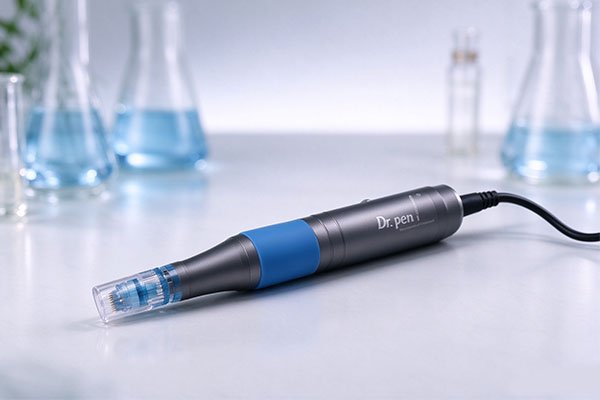
An electric microneedling pen is a beauty device that uses a motor to drive rapid, vertical needle movements. Depending on the model, users may be able to adjust the operating speed or needle depth to accommodate different treatment areas and professional protocols.
When used appropriately, microneedles create tiny channels in the skin that may be incorporated into specific skincare procedures. Electric microneedling pens typically feature replaceable needle cartridges, allowing professionals to select compatible accessories according to the device specifications and treatment requirements.
Traditional Derma Rollers: Manual Rolling Action
A traditional derma roller generally consists of a handle and a cylindrical roller fitted with fine needles. The operator manually moves the roller across the skin, allowing the needles to contact the surface as the roller rotates.
The angle and contact of the needles depend on the rolling direction, applied pressure, and operator technique. These tools have a relatively simple structure and do not require a motor, but their use requires appropriate handling skills.
Key Differences Between Electric Microneedling Pens and Derma Rollers
Precision and Control
Electric microneedling pens commonly offer adjustable operating speeds and needle depth settings, although the available options vary by model. Trained professionals can manage these parameters according to the manufacturer’s instructions and the applicable treatment protocols.
Traditional derma rollers rely primarily on manual control. Pressure, rolling speed, and direction can all affect needle contact. For professional applications that require more precise control over the procedure, electric microneedling pens generally offer greater flexibility in parameter adjustment.
Maneuverability and Treatment Areas
The pen-shaped design of an electric microneedling device makes it convenient to work on small areas and perform targeted movements. This design can be advantageous when working around facial contours or other areas requiring careful handling.
Traditional derma rollers are generally more suitable for continuous rolling across relatively flat areas. Extra care is necessary when working around curved or sensitive areas, such as the sides of the nose and the eye area. Operators must consider the tool’s dimensions, contact angle, and permitted areas of use.
Hygiene and Accessory Replacement
Electric microneedling pens typically use compatible needle cartridges, with some models designed for single-use sterile cartridges. Traditional derma rollers require cleaning, disinfection, or replacement according to the product design and applicable hygiene standards.
Regardless of the tool selected, appearance alone cannot determine whether a device is hygienic or safe. For procedures involving skin penetration, strict infection-control practices are essential. Needle devices must never be shared between individuals, and all needles and accessories should meet the relevant sterility and usage requirements.
Which Microneedling Tool Is More Suitable for Professional Beauty Businesses?
For Treatments Requiring Precise Parameter Control
Beauty salons and professional skincare providers that prioritize adjustability, operational consistency, and standardized procedures may wish to consider an electric microneedling pen.
When evaluating a device, buyers should examine motor stability, needle cartridge compatibility, depth adjustment mechanisms, handpiece design, and after-sales support.
However, adjustable settings do not mean that a device is suitable for every skin type or treatment. Procedures should be performed by appropriately trained professionals in accordance with the manufacturer’s instructions, the device’s intended use, and applicable regulations.
For Basic Applications and Simple Equipment Requirements
Traditional derma rollers have a straightforward structure and generally do not require a power supply or motor system. Their purchase and maintenance costs may also be more straightforward, although actual expenses depend on product quality, accessory requirements, and hygiene management procedures.
Beauty businesses considering microneedling services should evaluate staff training, consumable costs, customer needs, and risk management rather than comparing equipment prices alone.
What Should Buyers Consider When Purchasing a Microneedling Pen?
Device Performance and Needle Configuration
When selecting an electric microneedling pen, buyers should review the adjustable needle depth range, operating speed, power supply, cartridge specifications, and accessory compatibility.
Configurations can vary significantly between models, so purchasing decisions should be based on verified product specifications rather than general assumptions about the device category.
Manufacturer Capabilities and After-Sales Support
For beauty equipment distributors and private-label buyers, the manufacturer’s quality control, technical support, accessory availability, and OEM/ODM customization capabilities are also important.
A reliable supply chain and clear product documentation can support long-term business operations and equipment maintenance.
Aqual Beauty specializes in the development and manufacturing of beauty equipment. Buyers interested in professional microneedling devices and customized equipment solutions can explore its product range and related services.
Important Safety Considerations When Using Microneedling Tools
Microneedling is not suitable for everyone or every skin condition. Individuals with active skin infections, significant inflammation, or a compromised skin barrier should avoid microneedling. Those with a history of abnormal scarring, bleeding disorders, or other relevant health risks should consult a qualified healthcare professional before considering treatment.
Procedures involving skin penetration must also comply with local regulations and the device’s intended use. Before treatment, operators should verify needle sterility and ensure that the working environment meets appropriate hygiene requirements. Proper aftercare should follow professional guidance to reduce the risk of infection, pigmentation changes, scarring, and other complications.
Conclusion
The main differences between electric microneedling pens and traditional derma rollers lie in their needle-driving mechanisms, parameter control, and maneuverability. Electric microneedling pens generally offer advantages for professional applications that prioritize precise adjustments and standardized procedures, while traditional derma rollers feature a simpler structure and rely more heavily on manual technique.
For beauty salons, skincare professionals, and equipment distributors, the right choice depends on the intended application, device performance, hygiene requirements, and supplier support. Selecting appropriate equipment and following professional safety protocols are essential for supporting responsible skincare practices.





