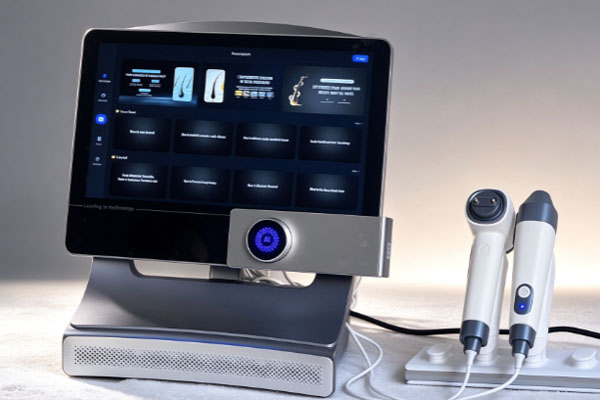
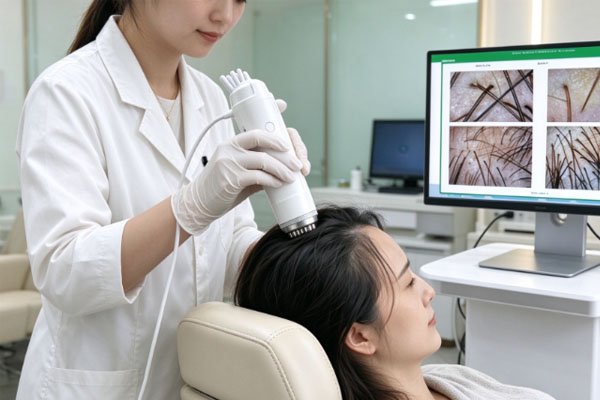
When observing hair with a hair analyzer, wet and dry hair usually display different visual characteristics. Moisture changes the way light reflects off the hair surface, the arrangement of individual strands, and the appearance of some cuticle scales. Therefore, the same strand of hair may show different image features under different moisture conditions. Comparing wet and dry hair can provide a clearer understanding of the hair surface, strand thickness, split ends, and the distribution of damaged areas. Hair analyzers are generally equipped with magnifying lenses and image display functions, helping users observe details that are difficult to distinguish with the naked eye. Whether used for daily scalp care, professional hairdressing consultations, or hair analysis services at beauty salons, choosing the appropriate observation condition is important. Wet hair images are more susceptible to interference from moisture and reflections, while dry hair images are generally more suitable for observing the surface texture of hair in its natural state.
Observation Results for Wet Hair
When moisture adheres to wet hair, the way light reflects off the strand surface may change. Some cuticle details may also become less clear because of the water film covering the hair. After absorbing water, hair may swell to a certain extent, making its appearance different from that of dry hair.
Surface Reflection Changes: Moisture can create reflective areas, making certain parts appear brighter and affecting the visibility of cuticle edges.
Changes in Strand Arrangement: Wet hair tends to clump together, reducing the spacing between individual strands and making it more difficult to observe the shape of each strand separately.
Differences in Hair Condition: After absorbing water, hair may swell to some extent. During observation, normal changes in wet hair should not be directly interpreted as damage.
Observing wet hair is not without value. If the purpose of testing is to understand the surface condition of hair after shampooing or compare visual changes before and after different hair care procedures, wet hair images can be recorded under standardized conditions. However, the moisture level should be controlled during observation to prevent water droplets and residual foam from obscuring details.
Observation Results for Dry Hair
Dry hair generally maintains a relatively stable shape, and individual strands are easier to separate. When viewed under magnification with a hair analyzer, the surface texture, split ends, broken strands, and localized rough areas can be examined more clearly.
Cuticle Texture: Under suitable lighting and magnification, dry hair makes it easier to observe the arrangement of surface scales and their edge characteristics.
Hair End Damage: Split ends, breakage, and obvious wear are generally easier to identify when the hair is dry.
Strand Shape: Natural curls, localized bends, and differences in strand thickness are often easier to compare in dry hair images.
Dry hair images do not necessarily reveal every detail. Oil, styling product residue, dust, and excessively strong lighting can also affect observation results. Therefore, hair should be kept as clean as possible before testing, and images should be captured using a stable light source and the same magnification level.
Which Details Should Be Prioritized When Using a Hair Analyzer?
Differences between wet and dry hair images are caused not only by moisture but also by hair cleanliness, shooting position, lighting conditions, and device performance. To improve the comparability of test results, the observation objective should be clearly defined before selecting the appropriate hair condition. For beauty salons, scalp care centers, and professional testing institutions that need to maintain inspection records, standardized operating conditions help reduce discrepancies between images captured in different sessions.
Observe Hair Cuticles, Ends, and Breakage
Hair cuticles form the protective outer layer of the hair shaft, and their arrangement is related to hair shine and texture. When observing hair with a hair analyzer, users can check for obvious rough textures, locally raised scales, or irregular edges. However, a single magnified image is generally insufficient to accurately determine the full extent of hair damage. The condition of the hair ends should also be examined. Factors such as repeated coloring and perming, blow-drying with hot air, and mechanical friction may cause split ends or breakage. These features are generally easier to document when the hair is dry. To compare wet and dry hair, images should be captured from the same or similar positions along the same section of hair to avoid misjudgments caused by differences in the observation areas.
Maintain Consistent Lighting, Magnification, and Shooting Positions
When using a hair analyzer, higher magnification does not necessarily mean more accurate test results. Excessively high magnification may narrow the field of view, making it difficult to determine how local features are distributed along the entire hair strand. Appropriate magnification should be selected according to device performance, observation objectives, and image clarity.
Maintain Stable Lighting: Avoid strong reflections caused by water droplets on wet hair, and prevent localized overexposure caused by excessively bright lighting on dry hair.
Keep Shooting Positions Consistent: Whenever possible, select the same area near the roots, the middle of the hair shaft, or the hair ends to ensure that images captured before and after treatment can be compared.
Record Testing Conditions: Recording whether the hair is wet or dry, the magnification level, and the time before and after hair care procedures helps users review image changes later.
If the hair analyzer includes software analysis functions, users can also save images, add inspection records, or compare images captured before and after treatment, depending on the device’s capabilities. These records help beauty professionals explain observation results to clients and enable brands, equipment distributors, and professional institutions to establish standardized testing procedures.
How Should the Observation Process for Wet and Dry Hair Be Arranged Correctly?
In practical applications, the testing objective should be clarified first to determine whether both wet and dry hair images are necessary. If the primary task is to observe cuticle texture, split ends, and broken strands, clean and thoroughly dried hair should be the preferred option. If the goal is to study the appearance of hair under moist conditions, wet hair images should also be collected, with the moisture level kept reasonably consistent across different samples.
Complete the Test According to Standardized Steps
To obtain clearer and more comparable images from a hair analyzer, the following operating sequence can be adopted:
Prepare the Hair Sample: Remove visible dust, foam, and styling product residue. When observing wet hair, remove excess water first to prevent water droplets from directly covering the camera’s field of view.
Adjust Device Settings: Set an appropriate magnification level and lighting intensity according to strand thickness and the observation area. Capture the image only after the display becomes clear.
Capture and Save Images: Record the wet and dry hair conditions separately. Keep the observation area, shooting distance, and device settings as consistent as possible to facilitate subsequent comparisons.
For beauty salons and professional hair analysis service providers, this procedure helps improve operational consistency. Users can also show clients images of the same area under different conditions and explain how moisture, lighting, and strand arrangement change the visual appearance. This helps prevent clients from mistaking temporary visual differences for hair damage.
Frequently Asked Questions
Q1: When using a hair analyzer to examine hair, which is more accurate: wet hair or dry hair?
Answer: It depends on the testing objective. Dry hair generally provides clearer images for observing cuticle texture, split ends, and breakage, while wet hair is more useful for examining changes in appearance after the hair becomes moist.
Q2: Does an obviously rough area in a wet hair image indicate hair damage?
Answer: Not necessarily. Water films, reflections, overlapping strands, and inaccurate camera focus may all make a localized area appear uneven. It is recommended to adjust the lighting and shooting position first, then examine the dry hair image. If the same area consistently displays obvious irregular textures across multiple images, it can serve as a basis for further examination. However, the extent of damage should not be determined solely from a single image.
Q3: Can a hair analyzer directly determine hair moisture content and the extent of hair damage?
Answer: Ordinary hair analyzers are primarily designed for magnified observation and image recording. They do not necessarily have the capability to directly measure hair moisture content or quantify the extent of damage. If moisture content data is required, equipment with the appropriate measurement capabilities should be used. If the mechanical properties of hair need to be evaluated, professional testing methods may also be necessary. When selecting equipment, users should confirm its actual functions, measurement range, and software analysis capabilities.
The main differences between observing wet and dry hair with a hair analyzer lie in the effects of moisture on strand shape, surface reflections, and image clarity. Wet hair tends to clump together and produce localized reflections, making it more suitable for documenting the appearance of hair in a moist state. Dry hair generally makes it easier to observe details such as cuticle texture, split ends, and breakage. During practical testing, the hair condition should be selected according to the observation objective, while cleanliness, lighting intensity, magnification, and shooting position should be kept as consistent as possible. For beauty institutions providing professional hair analysis services, selecting a hair analyzer with clear imaging, stable magnification, and image storage functions helps standardize testing procedures, maintain comparative records, and improve the accuracy of explanations provided to clients.