
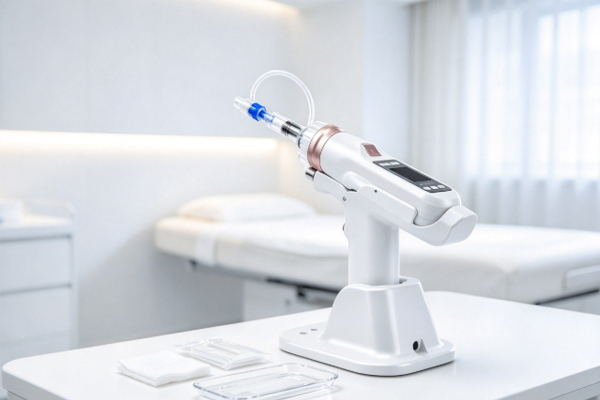
Mesotherapy guns and microneedling devices are both used in professional beauty treatments, but they are not the same type of equipment. A mesotherapy gun is primarily designed to assist with injection procedures, and some models offer dosage, speed, or vacuum adjustment features. Microneedling devices, on the other hand, use fine needles to create microchannels in the skin for specific microneedling treatments. For beauty clinics planning to introduce new services or upgrade existing equipment, understanding the differences in working principles, operating procedures, and consumables is more useful than comparing prices alone. It also helps ensure the selected device matches the clinic’s actual needs.
How Do Mesotherapy Guns and Microneedling Devices Work Differently?
Although both devices may involve needles, their core functions are quite different. Before choosing a device, it is important to understand the role it plays in a treatment procedure.
- Mesotherapy gun: Uses a drive mechanism to assist with professional injection procedures. The specific injection method depends on the device’s design.
- Microneedling device: Uses fine needles to create microchannels in the skin. Common types include electric microneedling pens and microneedling rollers.
- Different liquid delivery methods: Mesotherapy guns are generally used with syringes and compatible components, while active injection dosage control is not the primary function of a microneedling device.
In simple terms, mesotherapy guns focus on assisting with injections, whereas microneedling devices focus on creating microchannels. They are not interchangeable, and their needles and consumables should not be mixed unless compatibility is explicitly confirmed by the manufacturer.
Which Beauty Treatments Are Mesotherapy Guns and Microneedling Devices Suitable For?
When selecting equipment, start with the treatments the clinic plans to offer rather than focusing only on appearance or advertised features. Different procedures have different requirements for device controls, accessories, and material compatibility.
- Professional injection procedures: Evaluate the mesotherapy gun’s injection mechanism, dosage control method, and compatibility with syringes and connecting components.
- Microneedling treatments: Pay attention to needle design, depth adjustment, and operating stability. Confirm that the device is suitable for the intended procedure.
- Procedures requiring precise parameter control: Some mesotherapy guns support speed, dosage, or vacuum adjustments, while some microneedling devices allow users to adjust needle depth and operating speed. Available functions vary by model.
- Clinics focused on daily workflow efficiency: Consider how easily consumables can be installed, how quickly components can be replaced, and what training operators will need.
Both types of equipment should be operated by appropriately qualified professionals. For procedures involving injections or skin penetration, clinics must also consider material suitability, hygiene management, contraindication screening, and potential adverse reactions while following the device instructions and applicable local regulations.
Which Is Easier to Operate: A Mesotherapy Gun or a Microneedling Device?
The two devices involve different workflows, so neither can automatically be considered easier to operate. A mesotherapy gun requires knowledge of injection component installation, material compatibility, and parameter settings. Microneedling devices require attention to needle installation, treatment depth, movement techniques, and skin response management.
For beauty clinics, actual workflow efficiency also depends on training time, consumable replacement, cleaning and disinfection, and ongoing maintenance. Before purchasing, check whether the product instructions are clear, whether replacement accessories are readily available, and whether the manufacturer provides appropriate technical training. A simpler operating procedure does not necessarily mean lower risk. Parameters must still be set in accordance with the device instructions and treatment requirements.
Should You Buy a Mesotherapy Gun or a Microneedling Device?
Once the clinic’s treatment requirements are clear, comparing device specifications and ongoing operating costs can help prevent a mismatch between the equipment and its intended use. The following table highlights the key differences.
| Comparison Item | Mesotherapy Gun | Microneedling Device |
| Core principle | Assists with professional injection procedures | Creates microchannels using needles |
| Main applications | Suitable for relevant professional injection procedures | Suitable for microneedling treatments supported by the device |
| Liquid delivery | Generally used with syringes and compatible components | Active injection dosage control is not its primary function |
| Parameter settings | Some models support dosage, speed, or vacuum adjustments | Some models support needle-depth and speed adjustments |
| Common types | Electrically or mechanically driven injection-assistance devices | Electric microneedling pens and microneedling rollers |
| Consumables | Check compatibility between needles, syringes, and connecting components | Check needle component specifications and replacement requirements |
| Key selection criteria | Injection control, component compatibility, and operating stability | Depth adjustment, needle quality, and operating stability |
| Usage management | Focus on material compatibility, dosage management, and operating procedures | Focus on hygiene, skin injury risks, and post-treatment reactions |
When comparing equipment, it is also worth checking the following points:
- Suitability for the intended treatment: More features do not automatically mean a better device. The equipment should meet the actual requirements of the procedure.
- Reliable consumable supply: Confirm the specifications, usage requirements, and availability of needles, syringes, connectors, or microneedling components.
- Clear parameter controls: Review the control system and display to ensure operators can understand and use the settings correctly.
- After-sales support: Check warranty coverage, spare part availability, troubleshooting support, and technical training.
- Long-term operating costs: In addition to the purchase price, account for consumable replacement, maintenance, and staff training.
If a clinic focuses on professional injection assistance, it should compare mesotherapy guns based on their injection mechanisms, control features, and consumable compatibility. If the main service involves creating microchannels in the skin, the evaluation should focus on microneedling device design, depth adjustment, and operating stability. Carefully checking treatment requirements, operator qualifications, device instructions, and local regulations before purchasing will help clinics select equipment that better supports their daily operations.





