
Mesotherapy guns and regular injection guns may look similar because both are designed to deliver injections, but they are not necessarily the same. Their intended uses, injection control methods, and accessory requirements can differ. For beauty clinics, choosing a device involves more than comparing its appearance or advertised features. It is also important to check whether the device meets the needs of specific skin treatment procedures. Understanding these differences makes it easier to identify a suitable device and avoid problems caused by using equipment outside its intended purpose.
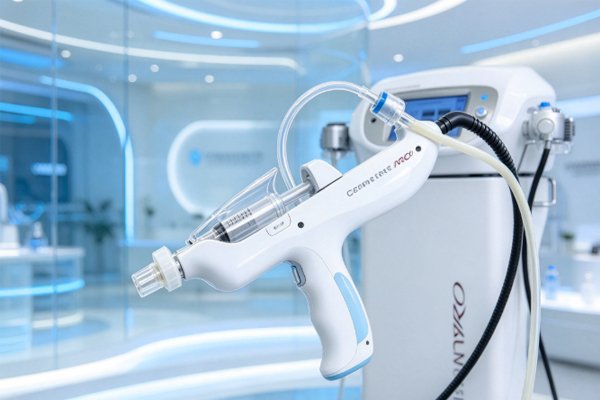
What Is the Difference Between a Mesotherapy Gun and a Regular Injection Gun?
Mesotherapy guns are primarily designed for specific professional aesthetic injection procedures. Some models allow users to preset the injection volume, helping qualified practitioners follow the device instructions during repeated operations. The term “injection gun,” however, covers a broad range of products designed for different applications, so not all injection guns serve the same purpose.
- Intended use: Mesotherapy guns are designed for specific aesthetic injection applications, while the intended use of a regular injection gun depends on its particular model.
- Injection control: Some mesotherapy guns allow users to preset the amount delivered per injection. The actual control method and accuracy depend on the product specifications.
- Accessory requirements: Needles, syringes, and other consumables are not necessarily interchangeable between the two types of devices. Compatibility must be confirmed for each model.
In simple terms, the key difference is not just the name of the device. Its intended use, available functions, and suitability for the planned procedure matter much more.
What Are Mesotherapy Guns and Regular Injection Guns Used For?
Mesotherapy guns are intended for professional aesthetic injection procedures that fall within the device’s approved or specified scope of use. Regular injection guns serve different purposes depending on their design, and some are not intended for aesthetic skin treatments. The table below highlights their common differences.
| Comparison | Mesotherapy Gun | Regular Injection Gun |
| Main use | Specific professional aesthetic injection procedures | Depends on the product’s intended use |
| Operating features | Some models support preset injection volumes | Control methods vary by model |
| Device design | May be designed for aesthetic injection needs | Configuration depends on the intended application |
| Compatible accessories | Needles and accessories supported by the device | Accessories must match the specific model |
For beauty clinics offering professional skin treatments, checking the device’s intended use and specifications should come first. Even if a regular injection gun looks similar to a mesotherapy gun, that does not mean it is suitable for aesthetic injections.
How Do Injection Volume Settings and Needles Differ?
Injection volume settings and needle specifications can affect how a device is used, making them important points to compare when evaluating different models. However, features vary from one product to another. Not every mesotherapy gun offers the same adjustment functions, and regular injection guns do not all use the same needle specifications.
- Injection volume: Check whether the device supports volume adjustment, how the settings are displayed, and what range is listed in the product specifications.
- Needle specifications: Confirm the supported needle models, connection types, and compatibility requirements. A needle that physically fits is not necessarily suitable.
- Product compatibility: Hyaluronic acid, exosome-based products, and vitamin E formulations can differ in composition and intended use. Confirm that each specific preparation is suitable for the intended route of administration.
- Routine maintenance: Review the replacement requirements for needles and other consumables, along with the device’s cleaning and maintenance instructions.
One important point: a product containing an aesthetic ingredient is not automatically suitable for injection. Topical skincare serums must not be treated as injectable preparations, and devices should only be used with products that meet their compatibility requirements.
How Can Beauty Clinics Choose the Right Mesotherapy Gun?
Beauty clinics should start by identifying the procedures they plan to offer, then compare the device’s functions and accessory requirements. Rather than choosing a model simply because it has more features, it is more practical to focus on functions that are genuinely useful for the intended applications.
- Check device functions: Confirm that injection volume settings and other operating controls are clearly specified.
- Check compatible accessories: Verify that needles, syringes, and related components match the selected model.
- Review product documentation: Look for clear instructions covering intended use, cleaning, and maintenance.
- Consider after-sales support: Check warranty terms, replacement accessory availability, and technical support for long-term use.
The main differences between a mesotherapy gun and a regular injection gun lie in their intended uses, available functions, and compatibility requirements. Beauty clinics should confirm the intended application before comparing injection controls, needle specifications, and product documentation. Appearance and product names alone are not enough to determine whether a device is suitable. If hyaluronic acid, exosome-based products, or vitamin E formulations will be used, their intended route of administration and compatibility with the device must also be verified. All injection procedures should be performed by appropriately qualified professionals in accordance with product instructions and applicable local regulations.





