
Skin moisture is a common parameter in skin management, providing useful information about stratum corneum dryness and helping guide daily skincare routines. For beauty clinics, skin management centers, and beauty equipment buyers, understanding the principles of moisture detection helps them interpret device readings correctly and select suitable testing tools based on their needs. It is important to distinguish skin imaging analysis from dedicated moisture measurement. Understanding the technology and its limitations is essential for accurately assessing skin moisture levels.
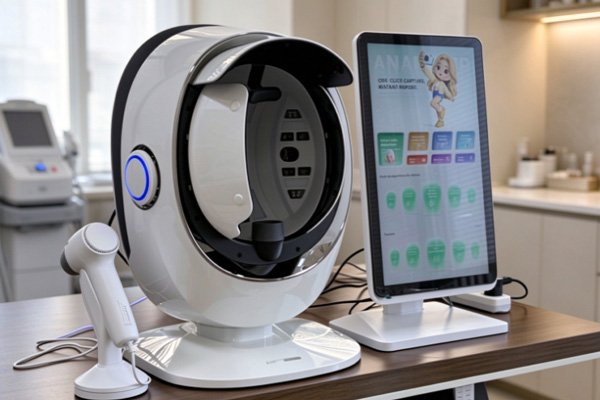
Basic Principles of Skin Moisture Detection
Common skin moisture testers primarily evaluate the hydration state of the stratum corneum by measuring the electrical properties of the skin. Different devices may use different measurement methods and display results in different formats.
Capacitive Measurement and Electrical Detection
Capacitive measurement is a common method for assessing stratum corneum hydration. It works by analyzing changes in measurement signals resulting from differences in the dielectric properties of water and other skin components.
- Capacitance measurement: When the probe contacts the skin, the device detects changes in capacitance and uses its internal algorithm to generate a moisture index or other measurement result.
- Conductance and impedance measurement: Some devices evaluate the superficial skin condition by measuring changes in electrical conductance or impedance. Results from different methods are not directly interchangeable.
- Understanding the measurement range: Common contact-based moisture probes primarily reflect the hydration state of the stratum corneum. They do not measure the total water content of the entire skin tissue or directly determine moisture levels in the dermis.
Understanding the measurement principles and scope helps users interpret device readings correctly.
Differences Between Skin Imaging and Moisture Detection
Skin imaging analyzers capture and process skin images to identify visible characteristics, making them different from dedicated moisture testers. Conventional visible-light, polarized-light, or ultraviolet imaging may be used to analyze pigmentation, pores, texture, and redness, depending on the device configuration. Brightness, shine, or flaking in ordinary photographs cannot directly provide a quantitative measurement of stratum corneum moisture. Some specialized spectroscopic technologies can analyze optical characteristics related to water content, but their actual capabilities should be confirmed through technical specifications and validation data.
Factors Affecting Skin Moisture Measurement Results
Skin moisture readings can be affected by skin condition, surface residues, and environmental factors. Standardizing measurement conditions improves the reliability of the results.
Skin Condition and Surface Residues
Moisture and chemical substances on the skin surface can alter the signals measured by a probe, making it important to assess the skin’s condition before testing.
- Sweat and residual moisture: Sweat and undried water may change local electrical properties, preventing the readings from accurately reflecting the original hydration state of the stratum corneum.
- Skincare product residues: Residues from toners, serums, or cleansing products containing electrolytes may interfere with certain capacitance, conductance, or impedance measurements.
- Skin preparation: Prepare the skin according to the device instructions. Avoid measuring immediately after cleansing, exercise-induced sweating, or applying skincare products.
Reducing interference from surface residues helps produce more meaningful measurement results.
Environmental Conditions and Measurement Methods
Temperature, humidity, and operating procedures can all affect readings. Consistency is particularly important when comparing measurements taken at different times.
- Control environmental changes: Allow the testing environment to stabilize according to the device requirements, and avoid directly comparing results obtained under substantially different temperature or humidity conditions.
- Use consistent measurement locations: Skin conditions may vary between areas such as the forehead and cheeks. Use the same location whenever possible for repeated measurements.
- Maintain consistent procedures: Follow the instructions for probe contact and measurement duration to minimize fluctuations caused by differences in technique.
Standardized measurement procedures help reduce the influence of external factors.
How to Interpret Skin Moisture Measurement Data Correctly
Measurement results provide reference information about the superficial skin condition, but they cannot independently represent the overall condition of the skin barrier or general skin health. Interpretation should take device-specific indicators and actual skin characteristics into account.
Understand the Meaning of Moisture Readings
Different devices may use different measurement technologies, calculation methods, and reporting units. Skin condition should not be judged solely by the numerical value.
- Identify the indicator type: Determine whether the device displays a moisture index, a rating, or a specific measurement value, and interpret it according to the product instructions.
- Consider visible skin characteristics: Assess the results alongside signs such as dryness, tightness, or flaking rather than relying on a single indicator.
- Understand the limitations: Moisture testing cannot replace a professional skin assessment or independently diagnose skin diseases.
Understanding the meaning of each indicator helps improve the professionalism of skin assessment services.
Track Changes Through Repeated Measurements
A single measurement reflects the skin condition under specific circumstances, while repeated records are more useful for observing trends. Recording the date, measurement location, testing conditions, and results makes comparisons easier. When readings change significantly, review the environment, surface residues, and operating procedures. Daily moisturizing recommendations can be adjusted according to the observed trends and actual skin condition. Persistent or significant abnormalities should be assessed by a qualified professional. Repeated measurements help track changes, provided that testing conditions remain comparable.
How to Choose the Right Skin Moisture Testing Equipment
Beauty clinics and equipment buyers should consider detection technology, result presentation, operating procedures, and maintenance requirements to ensure that the equipment meets their practical needs.
Evaluate Detection Principles and Functional Configuration
The technology used by a device determines what it can measure and how its results should be interpreted. Its actual capabilities should be clarified before purchase.
- Verify the measurement method: Determine whether the device uses capacitance, conductance, impedance, or a specialized spectroscopic technique, and confirm that its moisture detection function meets the intended requirements.
- Review result specifications: Examine indicator definitions, measurement ranges, repeatability, and usage limitations rather than judging performance solely by advertised precision figures.
- Distinguish device types: If the primary goal is to obtain stratum corneum moisture data, prioritize equipment with an appropriate moisture measurement function rather than products that only provide conventional skin imaging.
Clearly defining testing requirements helps buyers make more targeted equipment decisions.
Prioritize Operational Efficiency and Daily Management
Beyond meeting testing requirements, equipment should be easy for staff to operate and support effective customer data management.
- Evaluate the workflow: Review testing steps, probe cleaning requirements, and routine operating procedures to ensure that staff can use the equipment correctly.
- Check data management features: Depending on business needs, confirm whether the device supports saving measurement records, comparing historical results, or generating reports.
- Review maintenance support: Understand maintenance requirements, accessory availability, and technical support arrangements to facilitate long-term use.
Evaluating both equipment functionality and operating costs helps establish a standardized skin testing workflow.
The key to measuring skin moisture with a skin analyzer is understanding the technology used and the skin characteristics it can assess. Common electrical moisture testers primarily evaluate the hydration state of the stratum corneum, while ordinary skin images cannot directly provide reliable quantitative moisture measurements. Testing should also account for the effects of sweat, skincare product residues, environmental temperature and humidity, and measurement techniques. Guangzhou Cosnext Technology Co.;Ltd provides product and technical consultation for beauty equipment buyers, helping customers explore suitable skin testing equipment configurations based on their practical application needs.





