
As the beauty equipment market continues to expand, Fibroblast Plasma beauty machines are attracting attention from aesthetic clinics, equipment distributors, and professional buyers. When comparing plasma beauty devices from different brands, models, and price ranges, knowing how to evaluate product quality is an important part of the purchasing process. A high-quality device should not rely solely on its appearance, marketing claims, or selling price to demonstrate its value. Buyers should also examine technical specifications, hardware configuration, product documentation, safety requirements, and ongoing after-sales support. Different machines may vary significantly in their plasma generation systems, energy output methods, handpiece designs, and intended applications. Buyers should review manufacturer documentation, verify the actual equipment configuration, consider the regu
lations in the target market, and assess long-term operating costs. A systematic approach to quality evaluation can help reduce purchasing risks and provide a more reliable foundation for equipment management and business planning.
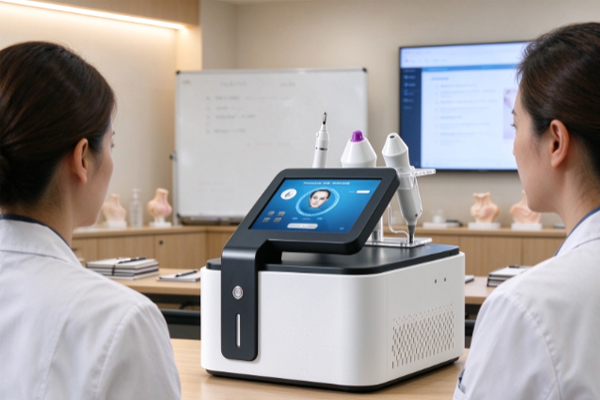
Are the Technical Specifications of the Fibroblast Plasma Beauty Machine Clear and Complete?
Technical specifications and product documentation are good starting points when evaluating the quality of a Fibroblast Plasma beauty machine. Reliable product documentation should clearly identify the model, manufacturer, plasma generation method, output modes, operating requirements, intended applications, and maintenance procedures. Different models may use different discharge structures, electrode configurations, and control systems. Similar appearances or identical product names do not necessarily mean that two machines have equivalent performance. Buyers should request a technical specification sheet that corresponds to the exact model being supplied and verify whether the parameters are clearly defined and accompanied by appropriate operating limitations. For claims involving output stability, control precision, or operating efficiency, buyers should review relevant test data and manufacturer documentation whenever available instead of accepting unverified performance promises. If a product page provides only general feature descriptions without specific parameters, operating instructions, or model information, further verification is necessary. Complete technical documentation does not automatically guarantee superior equipment quality, but it helps buyers understand the configuration, operating conditions, and maintenance requirements. It also provides an important reference for delivery inspection, operator training, and after-sales communication.
Which Hardware Components Should You Inspect When Evaluating a Fibroblast Plasma Beauty Machine?
Hardware configuration is closely related to operating convenience, routine maintenance, and equipment stability. During purchasing and inspection, buyers should examine the housing, handpiece, electrodes, control panel, connectors, and accessories, then compare these components with the manufacturer’s technical documentation.
- Plasma generation system: Verify the system structure, discharge modes, and relevant technical descriptions. Confirm that the supplier can explain key parameters and their practical purposes. The system’s performance level should not be inferred from the device name alone.
- Handpiece and electrode quality: Check whether the handpiece is easy to hold, whether electrode installation and replacement procedures are clearly documented, and whether connections are secure. Review the maintenance requirements for these components.
- Control system: Inspect the display, buttons, parameter adjustment interface, and status indicators. Confirm that the operating instructions help trained personnel understand the available settings correctly.
- Housing and connection components: Examine the exterior, interfaces, power connections, and other structural components for visible damage, looseness, or assembly defects. Compare the results with the manufacturer’s acceptance criteria.
- Consumables and accessories: Verify the quantity of included accessories, consumable specifications, compatibility, and future supply channels. This helps prevent interruptions caused by unavailable replacement components.
Hardware inspection should be combined with documentation checks, delivery acceptance procedures, and the manufacturer’s requirements. An attractive exterior, a large number of accessories, or a complex configuration cannot independently prove that a machine is high quality.
How Can You Verify the Safety and Compliance Documentation of a Fibroblast Plasma Beauty Machine?
Safety design and regulatory documentation are essential when assessing the quality of aesthetic equipment. Buyers should confirm that the intended use, permitted treatment areas, contraindications, risk warnings, and operating limitations are clearly documented. They should also verify the registrations, certifications, or other compliance documents required in the relevant sales and usage markets. Regulations governing medical devices and beauty equipment can differ between regions, so documentation accepted in one market should not automatically be assumed valid in every other jurisdiction. During verification, confirm that the manufacturer, product name, exact model, and equipment configuration shown in the documents match the actual product. This helps prevent situations in which certificates do not correspond to the equipment being delivered. Fibroblast Plasma beauty machines may produce localized energy or thermal effects through plasma discharge. Improper operation may cause burns, redness, pigmentation changes, infection, or scarring. Reliable product documentation should include necessary safety warnings, operating restrictions, maintenance instructions, and guidance for handling abnormal conditions. Whether a device is suitable for sensitive areas, such as the eye area, must also be determined according to the manufacturer’s instructions for the specific model and applicable regulations. Advertising descriptions and verbal assurances from sales representatives are not sufficient evidence. If a supplier cannot provide essential documents or explain the device’s intended applications and safety requirements, purchasing should be paused until the information has been verified.
How Can Supplier Services and After-Sales Support Help You Assess Equipment Quality?
Equipment quality is reflected not only in its hardware condition upon delivery but also in the maintenance support and problem-solving services available throughout its service life. Buyers can evaluate suppliers based on their technical knowledge, transparency, training arrangements, warranty terms, and ability to provide replacement parts. A reliable supplier should be able to provide complete product information, operating manuals, technical specifications, delivery checklists, and after-sales service terms. The supplier should also clearly explain maintenance intervals, wear-prone components, and common troubleshooting procedures. Before purchasing, confirm whether the supplier provides delivery inspection guidance, operator training, technical consultation, repair services, and necessary replacement parts. For equipment that requires ongoing consumable purchases, buyers should also understand consumable pricing, model compatibility, and supply lead times to avoid operational restrictions later. Warranty duration is not the only indicator of after-sales quality. Response times, repair procedures, service coverage, and clearly defined responsibilities are equally important. Buyers should record key commitments in the purchase agreement or other formal documentation and retain records of delivery, training, repairs, and maintenance. If a supplier emphasizes cosmetic results but cannot provide technical documentation or a clear after-sales plan, the risks of working with that supplier should be carefully evaluated. A transparent, standardized, and sustainable service system helps make equipment management more predictable.
How Should You Conduct an Overall Quality Assessment When Purchasing a Fibroblast Plasma Beauty Machine?
Before finalizing a purchase, buyers should evaluate technical performance, hardware quality, safety compliance, supplier support, and long-term operating costs within a unified assessment process. A comparison table can be used to record whether product documentation is complete, parameters are clearly specified, accessories are included, warranty conditions are reasonable, and the equipment meets its intended use and local regulatory requirements. After delivery, buyers should verify the model number, accessories, physical condition, and accompanying documents against the purchase agreement and manufacturer information. Acceptance checks and any required installation inspections should then be completed according to the specified procedures. For larger purchases, the agreement can also define delivery standards, training requirements, after-sales response procedures, and responsibilities for supplying replacement parts to reduce the likelihood of future disputes. Long-term cost calculations should include more than the initial purchase price. Consumables, maintenance, repairs, training, and potential operational interruptions caused by equipment downtime should also be considered. Products with unverifiable technical specifications, missing required documents, or significant inconsistencies in the supplied information should not be purchased hastily simply because they are inexpensive. The key to quality evaluation is ensuring that product documentation, actual configuration, regulatory requirements, and service commitments are consistent with one another. By establishing a standardized purchasing and inspection process, aesthetic clinics and equipment distributors can compare products more effectively and make better-informed decisions about long-term use and equipment management.





