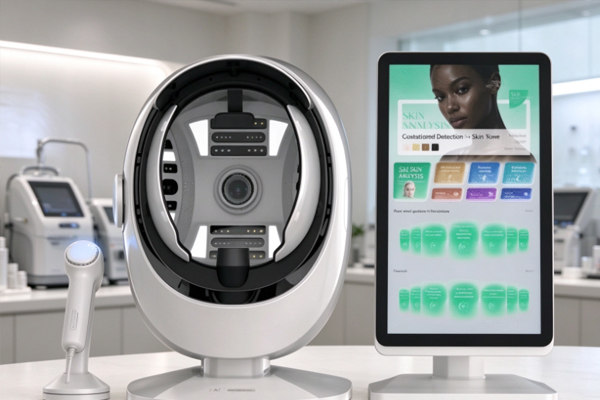
Facial wrinkles vary in location, texture, and visibility. Forehead lines, fine lines around the eyes, frown lines, and nasolabial folds each have distinct characteristics. Visual assessment alone can be affected by lighting, facial expressions, and viewing angles. A skin analyzer uses standardized imaging, skin texture visualization, and image analysis to help identify wrinkle locations, patterns, and distribution, organizing the findings into reports for review. Understanding how these devices work and how they are used helps beauty professionals assess skin conditions, present observations, and support discussions about subsequent skincare treatments.

How Does a Skin Analyzer Identify Facial Wrinkles?
Facial imaging is an important part of wrinkle analysis. By capturing skin surface details under appropriate lighting conditions, a device helps users observe texture variations across different facial areas.
Using Polarized Imaging to Reveal Wrinkle Texture
Polarized imaging changes how light reflected from the skin surface is presented. Imaging modes that emphasize surface details are useful for observing fine lines and wrinkle contours.
- Fine Line Identification: Reveals subtle linear textures around the eyes, forehead, and other areas, helping users observe the distribution of fine lines.
- Contour Visualization: Helps distinguish general skin texture from more prominent creases and observe wrinkle patterns.
- Surface Condition Assessment: Combined with skin texture images, it helps users observe characteristics such as roughness and dry-looking texture that may affect the skin’s appearance.
The main value of polarized imaging is to make certain surface details easier to observe. It does not mean the device can directly measure the actual depth of every wrinkle.
Using Standard-Light Imaging to Observe Wrinkle Distribution
Standard white-light images present the overall appearance of the face and provide a visual reference for identifying wrinkle locations.
- Forehead Area: Observe horizontal lines and creases around the glabella.
- Eye Area: Examine fine lines at the outer corners of the eyes and texture changes around the lower eyelids.
- Mouth and Cheek Areas: Observe lines around the nasolabial folds and mouth corners, as well as surface irregularities on the cheeks.
Combining images of different facial areas helps establish a more complete record of wrinkle distribution and provides a foundation for further analysis.
How Does a Skin Analyzer Distinguish Different Wrinkle Characteristics?
Wrinkles vary in appearance depending on their location and texture. Examining these characteristics by area helps make the analysis more specific and makes it easier to explain facial skin conditions to clients.
Analyzing the Appearance of Dynamic and Static Wrinkles
Dynamic wrinkles become more noticeable during facial movements, while static wrinkles may remain visible when the face is relaxed. Comparing images taken during different expressions helps reveal changes in lines on the forehead, between the eyebrows, and around the eyes. Wrinkles and creases that remain visible in a relaxed state can also be recorded. Camera angles and lighting should remain consistent whenever possible. Standard static imaging only captures the appearance at a particular moment. Distinguishing dynamic from static wrinkles requires observing different facial expressions rather than relying on a single photograph.
Examining the Relationship Between Wrinkles and Skin Texture
The appearance of wrinkles is also influenced by the condition of the skin surface. Fine lines, roughness, and localized dry-looking texture may occur together.
- Texture Details: Examine whether the skin surface shows clusters of fine lines or uneven patterns.
- Localized Differences: Compare the forehead, eye area, and cheeks to understand how texture varies across facial regions.
- Image-Based Documentation: Review wrinkled areas alongside images of the surrounding skin to avoid focusing on a single line while overlooking the broader condition.
A comprehensive visual assessment provides a more complete description of facial appearance. However, fine lines in an image do not directly prove collagen loss or a specific skin condition.
How Do Skin Analysis Reports Present Wrinkle Information?
Skin analysis reports bring facial images and related analysis results together, helping beauty professionals communicate with clients and retain records for comparisons over time.
Organizing Wrinkle Information Through Regional Markers
Devices with the appropriate functions can identify and mark specific facial areas, helping users locate the regions that require observation.
- Area Identification: Examine the forehead, eye area, glabella, and nasolabial folds separately.
- Texture Marking: Use image annotations to display linear features identified by the system for further review.
- Result Organization: Present observations from different facial areas together, making it easier to explain specific characteristics to clients.
Automatic markings are image analysis results. Users should compare them with the original images to determine whether the markings correspond to the actual skin texture.
Comparing Appearance Changes Through Images Taken Over Time
Saving skin images from different dates helps users compare wrinkle appearance and gives skincare consultations a concrete reference. Comparisons may focus on forehead lines, crow’s feet, or nasolabial folds. Facial expressions, camera distance, angle, and lighting should remain as consistent as possible. Factors such as skin dryness, makeup, and recent skincare treatments should also be considered. Image comparisons can help track visible changes, but differences alone cannot establish treatment effectiveness or determine changes in underlying skin tissue.
How to Use Facial Wrinkle Analysis Results Appropriately?
Wrinkle analysis is not only about displaying lines. It also helps users maintain consistent records, explain observations, and plan subsequent client communication according to practical needs.
Selecting Imaging Methods Based on Wrinkle Assessment Goals
Different imaging modes serve different purposes. Choosing suitable images helps improve observation efficiency.
- Fine Line Observation: Use imaging methods that emphasize surface texture to examine subtle lines and localized patterns.
- Overall Distribution Assessment: Combine standard-light images to review the visible appearance of wrinkles across different facial areas.
- Before-and-After Comparison: Capture images under consistent conditions to reduce interference from external factors.
Combining localized details with overall facial images makes wrinkle assessment more systematic and provides a clearer basis for explaining the findings to clients.
Avoiding Overinterpretation of Analysis Results
A skin analyzer provides image-based and algorithm-assisted information. The accuracy of the results depends on the device configuration, imaging conditions, and available analysis functions.
- Understanding Scores: Scoring criteria may differ between devices, so numerical results should not automatically be treated as a universal wrinkle severity scale.
- Considering Visible Appearance: Interpret results alongside the actual skin condition and image details rather than treating a single indicator as a complete assessment.
- Recognizing Limitations: Image analysis cannot replace medical diagnosis. If wrinkles occur alongside unusual skin lesions or other persistent skin problems, consult a qualified medical professional.
Clearly explaining the scope of analysis helps clients develop realistic expectations and supports better communication during beauty consultations.
Skin analyzers use standard-light imaging, polarized imaging, and image analysis to help visualize fine lines, prominent creases, and texture variations across different facial areas. The resulting records make observations easier to review. For beauty professionals, clear wrinkle images and consistent comparisons over time can help clients better understand their visible skin condition. Guangzhou Cosnext Technology Co., Ltd. can provide information about relevant skin imaging and analysis equipment, helping beauty businesses explore configurations that suit their practical needs.