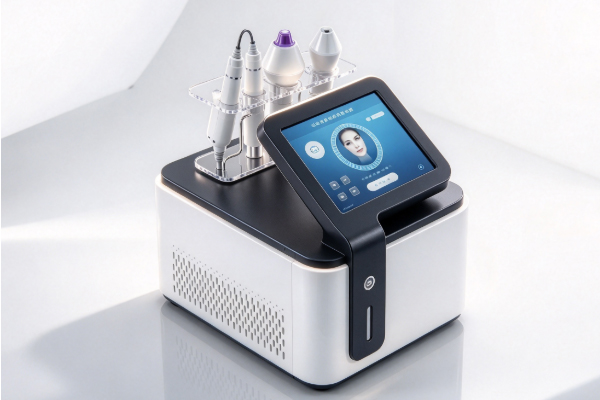
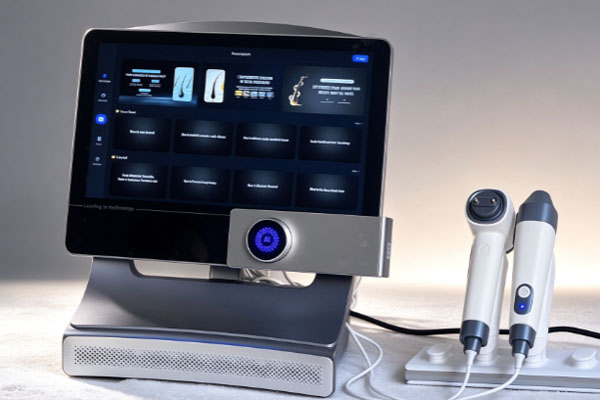
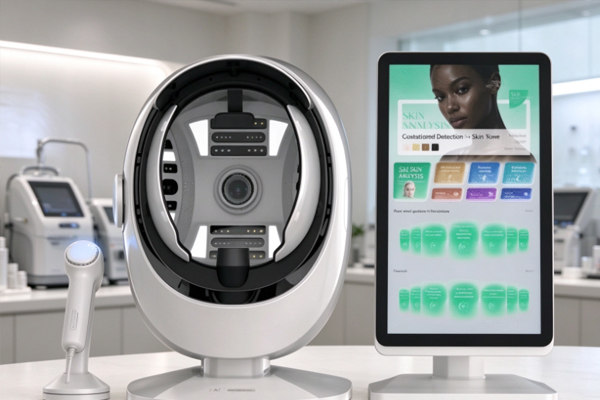
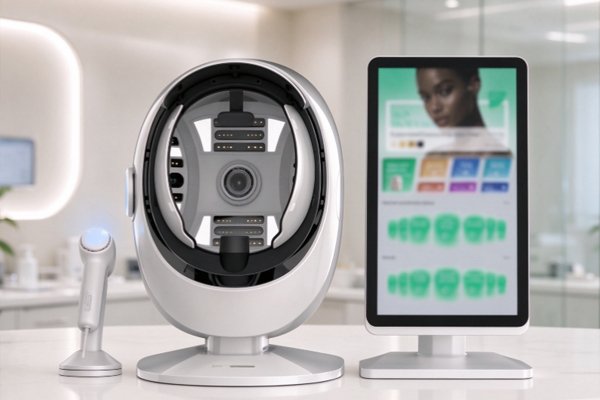
It is difficult to create a complete record of pores, skin tone, texture, and localized skin characteristics through daily observation alone. A skin analyzer collects and organizes visible facial skin conditions, allowing beauty professionals to obtain clearer observation references through the device. Understanding the general process from image capture to result presentation can help beauty institutions arrange skin analysis procedures more effectively and allow clients to gain a clearer understanding of their own skin condition.
How Does a Skin Analyzer Collect Skin Information?
Skin analysis relies on clear and stable images. The device uses an imaging system to capture information from facial areas and provide original data for subsequent analysis.
Capturing Facial Skin Images
A skin analyzer captures images of facial areas and converts visible skin characteristics into digital images.
- Facial Recording: Complete images are captured from the facial areas being examined, allowing the condition of different areas to be recorded.
- Detail Presentation: Device imaging makes it easier to observe localized characteristics on the facial surface.
- Consistent Storage: Captured images can become part of the analysis results and provide reference materials for later viewing.
After image capture is completed, the device can further analyze the recorded skin characteristics.
Capturing Skin Characteristics in Different Areas
Skin conditions can vary across different facial areas, making it important to focus on specific areas rather than observing the entire face as a whole.
- Area Observation: Examining areas such as the forehead, nose, and cheeks makes localized differences easier to identify.
- Detail Recording: Recording localized characteristics as images makes it easier for beauty professionals to provide targeted explanations.
- Result Organization: Information from different areas can be organized into clearer skin analysis results.
Recording different areas separately makes the analysis more specific and provides a foundation for further evaluation of skin conditions.
How Does a Skin Analyzer Organize Analysis Results?
After images are captured, the analysis results need to be organized and presented so that beauty professionals and clients can better understand the specific skin characteristics.
Turning Skin Characteristics into Clear Results
Images captured by the device help users view facial skin conditions and present information that may otherwise be scattered. Viewing facial skin characteristics through analysis images makes recording more convenient than relying only on visual observation. Areas requiring closer attention can be compared through localized images, while organizing the captured information helps beauty professionals provide clearer explanations during consultations. Clear result presentation makes the skin analysis process easier to understand and helps clients identify the specific characteristics being observed.
Observing Changes Through Analysis Records
Skin conditions can change over time and during ongoing care, while continuous records provide useful references for later observation.
- Saving Analysis Results: Recording analysis information from different periods can create continuous skin records.
- Before-and-After Viewing: During subsequent analysis, previous records can be reviewed to observe changes in relevant areas.
- Progress Tracking: Continuous records can help beauty institutions understand changes in a client’s skin condition over different stages.
Continuous recording allows skin analysis to extend beyond a single observation and provides more complete information for subsequent client communication.
What Skin Characteristics Can a Skin Analyzer Observe?
A skin analyzer is mainly used to assist in observing facial skin conditions. Different analysis areas may present different characteristics, and the actual information available should depend on the functions of the device itself.
Observing Facial Surface Conditions
Details on the facial surface are relatively direct elements of skin analysis, and device imaging makes these characteristics easier to examine.
- Skin Texture: Analysis images can be used to observe the texture of the facial surface.
- Pore Conditions: Pore characteristics in different facial areas can be viewed to provide references for beauty consultations.
- Localized Differences: Comparing images from different areas can reveal variations between different parts of the face.
These observations help beauty professionals establish more specific references and make analysis results easier for clients to understand.
Observing Localized Facial Changes
Different areas of the same person’s face may show different characteristics, so specific locations need to be considered during analysis. Facial areas of interest to the client can be examined and recorded, while analysis records from different periods can be used to observe localized changes. The results can also assist beauty professionals in explaining the findings and communicating with clients. Considering localized information makes the skin analysis process more relevant to actual skincare needs.
How Can a Skin Analyzer Assist Beauty Institutions with Client Communication?
Skin analysis is not limited to the image capture process. The way analysis results are presented can also affect how clients understand their skin conditions.
Analysis Results Help Clients Understand Their Skin Conditions
Presenting skin conditions through images allows clients to see the information recorded during the analysis more directly.
- Result Presentation: Analysis images can show clients the actual skin characteristics captured during the process.
- Key Explanation: Beauty professionals can explain specific areas based on the analysis results, making communication clearer.
- Direct Viewing: Clients can use the analysis results to identify facial areas that require closer attention.
Clear result presentation can reduce differences caused by relying only on verbal descriptions and make beauty consultations more specific.
Analysis Records Support Ongoing Skin Management
For clients who require ongoing skin management, retaining analysis records provides continuous information for future communication.
- Record Building: Saving each analysis result creates a continuous skin record for the client.
- Follow-Up Comparison: During subsequent analysis, previous records can be retrieved for reference and comparison.
- Communication Reference: Beauty professionals can review historical analysis information and communicate with clients based on actual recorded data.
Complete analysis records make it easier for beauty institutions to manage client skin information and create clearer connections between multiple care sessions.
The core value of a skin analyzer lies in recording and organizing facial skin conditions through images, giving beauty institutions clearer observation references. For beauty scenarios involving professional skin analysis, client consultation, and continuous record keeping, a standardized analysis process can help staff present current skin characteristics in a more organized way. Guangzhou Cosnext Technology Co.;Ltd provides skin analyzer products for skin analysis and client communication applications in beauty institutions.